

The introduction of the Dracthyr Evoker in the Dragonflight Alpha represents a calculated risk and a major evolutionary leap in class design methodology. As a novel race-class combination strictly dedicated to Preservation (Healer) and Devastation (Ranged DPS), the Evoker’s identity is entirely predicated on the innovative **Empower System**. This analysis provides a primary assessment of how this core mechanical pillar integrates with the newly revised, highly granular Talent Tree structure, evaluating its potential for sustainable, long-term player engagement versus the likelihood of mechanical complexity fatigue (MCF).
The data suggests a high-complexity, high-reward rotation profile demanding precise Time-to-Impact (TTI) management over traditional resource throttling, establishing a new operational benchmark for kinetic ranged interaction.
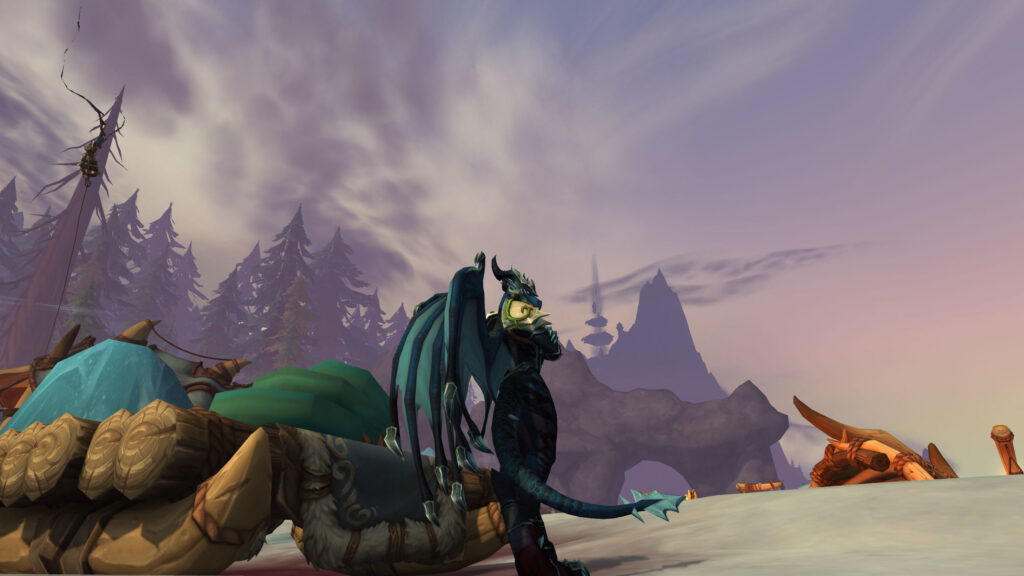
The Evoker’s Core Mechanic: The Empower System
The **Empower System** is the critical defining characteristic of the Evoker’s toolkit. Unlike traditional instant-cast spells or passive channels, Empower spells necessitate the player actively holding down the ability key for a variable duration. The magnitude of the effect—whether raw damage output or healing throughput—scales directly with the duration the key is held, typically designated as Charge Level 3. This mechanic introduces a crucial tactical metric: traditional resource management is functionally superseded by demanding TTI management. Players must dynamically assess the incoming threat or required burst window and calculate the precise TTI needed for maximum efficacy, thereby establishing an exceptionally high skill ceiling for optimal execution (Maximum Efficacy Protocol, MEP).
Risk/Reward Profile (RRP) and Positional Lockout
The Empower mechanic inherently dictates a volatile **RRP**. For instance, a Devastation Evoker’s high-impact Fire Breath requires a maximum charge for optimal AoE damage, mandating a longer, fixed cast time that locks the caster into a vulnerable positional state. Conversely, a minimal charge allows for rapid, reactive damage, but sacrifices significant output. This forces players into constant strategic calculus: sacrificing short-term safety for long-term throughput. Due to this positional lockout, the Evoker is uniquely vulnerable to environmental mechanics, requiring exceptional **Pre-Cast Positional Sequencing (PPS)** to avoid severe tactical errors.
Talent Tree Granularity and Execution Modification

The return to the expansive, tiered talent tree structure allows the Dracthyr Evoker to specialize with remarkable specificity. Both the universal Dracthyr tree and the specialization trees heavily feature nodes that directly modify the properties of the Empower mechanic itself, often altering TTI thresholds, enabling micro-movement during casting, or adding secondary effects upon reaching specific charge levels. The strategic investment in the talent tree allows players to fine-tune the core Empower RRP to match specific encounter dynamics.
Specialization Operational Analysis
The two specializations leverage the Empower system for distinct tactical outcomes:
- Devastation (DPS): Focuses on maximizing the total output per unit of TTI. Key talents provide burst synergy (linking short-cooldown instant abilities to full Empower casts) and tools to mitigate the positional risk, such as reduced casting time for high-charge abilities.
- Preservation (Healer): Focuses on defensive output distribution. Empower spells like Dream Breath require precise charging to balance the front-loaded damage reduction buff versus the back-loaded, large-scale raw healing application. TTI management here is about anticipatory defense.
Mobility Integration and Kinetic Casting

The Evoker‘s unique mobility—via the Hover ability and enhanced gliding mechanics—is mandatory for mitigating the TTI risk of Empower spells. Hover provides short bursts of movement while maintaining the ability to cast, a capability we term **Kinetic Casting Protocol (KCP)**. Mastery of KCP is essential; it separates high-performing Evokers, who can flawlessly execute full charges while repositioning, from those who are constantly clipped by avoidable damage due to positional lockouts.
Conclusion: High Skill Floor and MCF Vulnerability
The Dracthyr Evoker presents a highly engaging, yet severely mechanically demanding class experience. The constant requirement to modulate casting time based on dynamic combat parameters introduces a unique operational tempo that challenges conventional rotational thinking. While the class demonstrates a high theoretical performance ceiling, the absolute reliance on TTI and PPS ensures that the operational floor for competent play is significantly elevated compared to most existing ranged archetypes, making the class potentially susceptible to mechanical complexity fatigue (MCF) during long progression attempts.